NAIL HEALTH · 15 MIN READ
How long do gel nails and gel extensions last?
A realistic answer for gel polish and for gel extensions: what decides how long a set lasts, why extensions follow a refill rhythm, and what shortens both.
Khulasa: Gel nails aam tor par do se teen hafte tak achhe rehte hain, aur sahi aftercare se set aur lamba chalta hai.
The honest answer
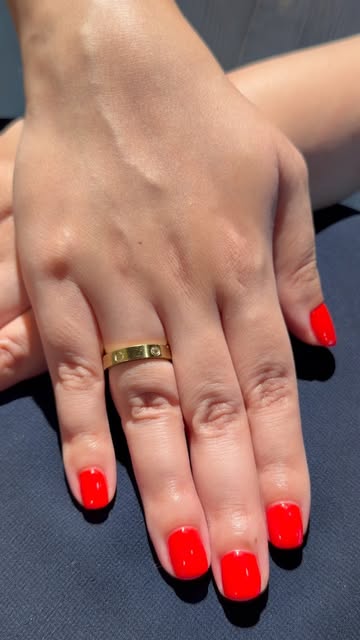
Gel colour usually wears around two to three weeks before regrowth shows at the base. The gel itself often still looks fine at that point. What changes is the gap near your cuticle as your natural nail grows.
Gel extensions follow a similar rhythm. Most people come in for a refill somewhere in that window, not because the set failed, but because the grown-out gap starts to show. Everyone's nails grow at their own pace, so treat these as typical, not promised.
Extensions wear on a different clock
Gel polish sits flat on your own nail and bends when your nail bends. An extension does not. It adds nail past your fingertip, and that extra length carries load your natural nail never had to carry. So the part that gives way first on an extension set is usually not the colour. The colour is often the last thing still looking fine. What moves is the join at the base and the tip at the far end, and both of those are structural rather than cosmetic. People who have only ever worn gel polish are often surprised by how differently an extension set ages.
As your natural nail grows, the whole extension travels forward with it. The strongest part of the build, the slight thickness near the base that carries the nail, ends up sitting further out than it should, and the join starts showing as a small step near your cuticle. At the same time, every knock against a door, a drawer or a car handle lands further from your fingertip, so it arrives with more leverage behind it. A set that felt solid in the first days can start catching on fabric later without anything having visibly failed.
Which is why two people can give completely different answers to the same question. A set that is still on, with all ten nails attached and nothing lifting, is not always a set that still looks right. Most people replace or refill long before anything comes off, because the grown-out gap at the base is what they see in photos and what other people notice too. If you are asking how long extensions last, be clear with yourself about which one you mean, because the honest answer to how long they stay on is longer than the answer to how long they look fresh.
An extension set is maintained, not worn out
Most people do not wear an extension set until it breaks. They maintain it. The set stays on your hands and gets rebalanced on a rhythm, which is why how long extensions last is a slightly different question from how long a gel colour lasts. Most people find they are ready for a refill somewhere around two to three weeks, and that is a general norm rather than a promise, because nails grow at their own speed. The set is not finished at that point. It has simply grown out far enough that it wants attention.
A refill deals with the part that has moved. The grown-out area near the cuticle is filled in, the thickness is rebuilt where it belongs so the nail sits balanced again instead of top heavy, the shape is tidied, and the surface and colour are redone. Anything that has lifted at an edge gets taken back to sound product first, because filling over a lift traps water underneath and stores up a bigger problem for later. What a refill does not do is reset the set. The tips you started with are still the tips you have.
Choosing between another refill and starting fresh usually comes down to how the set feels rather than how it looks. If the nails still sit light and flat and the shape still suits you, refilling carries on. If the same two or three nails keep needing repairs, if the tips have started to feel thick after several rounds of rebalancing, or if you want a different length or shape, a fresh set is the cleaner answer. Starting again is also the easiest moment to look at the natural nail underneath and give it a short rest if it wants one.
What decides the answer for your hands
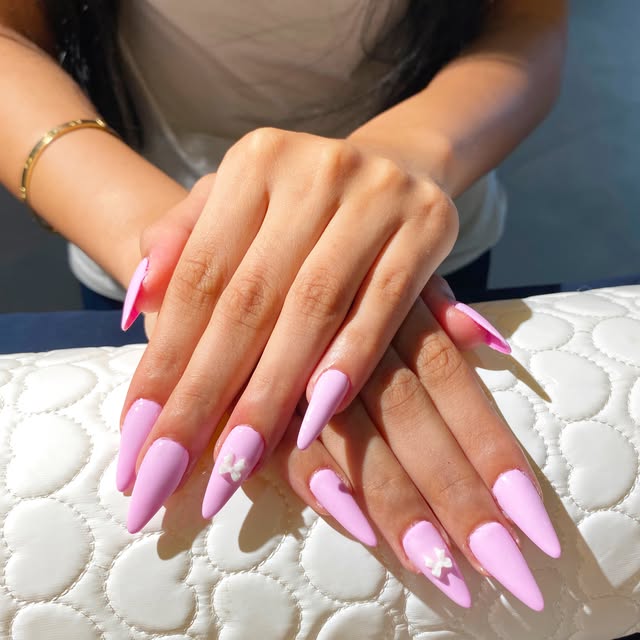
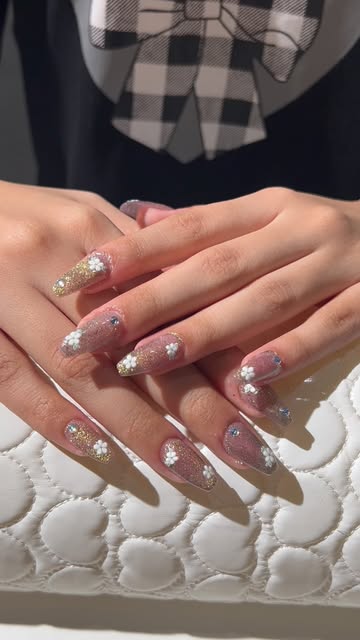
Length and shape decide more than anything else on the list. A short set with a soft rounded or squoval edge takes a knock and passes it straight through. A longer set, and especially a sharp or tapered shape, turns the same knock into a lever. Almond and coffin lengths look beautiful in photos and ask more of you in a kitchen. None of that means long nails are a mistake. It means the length you pick is the single biggest thing you are deciding when you decide how much wear you are willing to live with.
Then there is what your hands actually do between appointments. Cooking with oil and haldi, kneading dough, washing dishes and clothes by hand, and wudu several times a day all put warm water and pressure on the same fingers, day after day. Water is the quiet factor. It does not break anything on its own, it simply works its way in at any edge that has started to lift. Some clients also ask whether gel is appropriate for wudu at all. That is a question for a scholar and not for a nail studio, so we point it there and stay on the practical side.
You will also notice that the hand you use most goes first. The index and middle finger of your dominant hand do most of the opening, scrubbing and lifting, and they are almost always the nails that chip, catch or need a repair before the rest. That is ordinary, and it is worth mentioning at your appointment, because length can be adjusted a little on the fingers that take the most punishment. All of which is to say that the honest answer to how long a set will last is decided before it goes on, in the conversation about length and shape, not afterwards.
When a set fails in the first few days
A chip in week three and a chip on day two are two completely different stories. Wear around the two to three week mark is ordinary. Something lifting, peeling or popping off inside the first two or three days usually points back to the application rather than to anything you did, and it is worth saying so instead of quietly assuming you were rough with your hands. Most salons would far rather hear about it in week one, while the set is fresh enough to see what happened.
The usual causes are moisture or oil left on the nail before the product went on, product touching the skin or cuticle so it lifts from the edge inward, layers laid on too thick to cure all the way through, or a free edge that was not sealed. Hand cream or oil applied right before your appointment can add to it, and that is the one part of this list you control: turn up with clean, dry nails and nothing on them.
When you do raise it, be quick and be specific. A photo, the day it happened, and which nail it was gives a salon far more to work with than a general complaint that it did not last. If something goes wrong early with a set from us, message MB on Instagram with that photo and we will tell you honestly what we think happened, including if the answer is that the design or length was not right for your hands.
How the weather here changes a set
Summer is the part people rarely connect to their nails. Through June and July the heat sits on you all day, hands stay faintly damp, and the skin around the nail softens and swells a little. None of that breaks anything. What it does is change the conditions at the edges, where product meets skin, and edges are where wear tends to begin. So someone who has worn the same length and the same finish all year sometimes finds her sets behaving differently in high summer, with nothing about the set or the person applying it having changed. That is a general pattern across warm humid months, not a fault, and it is worth naming instead of quietly wondering what went wrong.
Winter swings the other way. The air goes dry, hands and cuticles dry with it, and dry skin flakes and lifts around the nail so the edge of the product sits a little more exposed than it did. Then there is the dust. Winters here are dusty, and fine grit works its way into everything, including the small gap at a free edge or a corner that has started to lift. What people report is tips feeling rough and catching on clothes sooner than they expected. Strong sun over months is the other thing clients mention, usually on pale shades and bright colours, which can read slightly less sharp by the end of a set than they did in the chair.
None of this changes what you should book. It changes what is worth saying when you book it. Tell us the month. A function in June is a different conversation from the same function in December, even when you want exactly the same nails, because the season sitting around a set is part of the set. Say what your days look like in that month too: kitchen, travel, time outdoors, a run of functions. Length, shape and finish are all easier to choose well when the person choosing knows the season they are choosing for. Something as short as, my mehndi is in June and I am in the kitchen all week, is enough to start from.
What shortens a set
Hot water is the quiet one. Long hot showers, dishwashing without gloves, and daily soaking all loosen the bond over time. The gel does not dissolve, but the edges start to lift sooner.
The louder ones are habits. Using your nails as tools to open cans, scratch off stickers, or peel tape stresses the tips. Picking at a tiny lifted corner turns it into a big one.
Dryness matters too. Skipping cuticle oil leaves the nail and the skin around it dry, and dry nails chip and lift more easily. It is a small habit with a big effect.
What the way it came off tells you
How a set fails is a clue worth reading. A whole nail that pops off in one piece points at the bond at the base, usually preparation or moisture. Product that peels away in a sheet, like a sticker coming off, points in the same direction. Chips confined to the very tip are a different story and usually mean the free edge is taking the impact, often because of length, shape, or simply the way you use your hands all day.
A crack running across the middle of a nail is a stress story: a knock, a door, or more length than that particular finger can carry. Colour that goes dull or slightly cloudy without chipping at all is generally the topcoat taking a beating from hot water, cleaning products and daily wear, not the set failing. Each of these has a different fix, which is exactly why the detail is worth mentioning instead of just saying it chipped.
Anything happening to the skin rather than to the product is a different matter altogether. Redness, swelling, itching, or skin lifting away at the side of a nail is not a wear question and not something a salon should be judging for you. Take it to a dermatologist, leave that nail alone in the meantime, and hold off on booking anything new until you have been seen.
Aftercare that actually helps
Cuticle oil once or twice a day is the habit that helps most. It keeps the nail and the skin around it flexible, and flexible nails chip less. Keep a small bottle by your bed or in your bag.
Wear gloves for dishes and heavy cleaning. Open things with tools, not your tips. If an edge lifts, resist the peel and message us for a fix instead. Small habits like these are what separate a set that struggles in week one from a set that still looks fresh in week three.
Small fixes between appointments
Two to three weeks is a long stretch to leave a set completely alone, and a few small things are worth doing. If a tip starts snagging on fabric, run a fine file across it in one direction to smooth the catch, but do not clip it and do not file the shape thinner. If a corner lifts, cover it with tape until you can get in, because an open edge lets water underneath and turns a small lift into a much bigger one within days.
Staining is the other mid-set complaint, and in Lahore kitchens it is almost always haldi. Turmeric, strong masala and some dyes leave a yellow cast on the surface of the topcoat rather than on the nail itself, which is why it often fades with washing and a little gentle rubbing with soap. Gloves while cooking prevent it in the first place. Nudes, whites and pale pinks show it the most, so keep that in mind when you pick a colour before shaadi season.
If the set is intact but the colour has gone flat, that is usually the topcoat rather than the whole set, and your salon can tell you whether refreshing it is worth an appointment or whether you are close enough to a refill to simply wait. Do not put a shop-bought topcoat over salon gel without asking first, because not every product sits happily on top of every other one.
Refill or fresh set?
A refill fills the grown-out gap at the base and rebalances the nail, keeping the same set going. It suits you when the set is intact, nothing is lifting badly, and you are happy with the shape and length.
A fresh set makes more sense when there is a lot of lifting, you want a new shape or length, or the set has been refilled a few times and feels heavy. It is also the natural moment to check how your nails are doing underneath and take a short break if they need one.
Not sure which you need? Send us a photo of your current set in chat and we will tell you honestly whether a refill will do or a fresh start is better.
Common questions
How long do gel nails usually last?
Gel colour usually wears around two to three weeks before regrowth shows at the base. The gel itself often still looks fine at that point; it is the growing gap near the cuticle that dates a set. Growth speed varies from person to person.
Why do my gel nails chip so fast?
The usual reasons are lots of hot water without gloves, using nails as tools, picking at lifted edges, and dry nails from skipping cuticle oil. Rough or rushed preparation at application can also shorten wear. Fixing the daily habits usually makes the biggest difference.
Should I get a refill or a new set?
A refill works when the set is intact, you like the shape, and it only needs the grown-out gap filled. Choose a fresh set when there is heavy lifting, you want a new shape or length, or the set feels thick after several refills.
My gel chipped on day three. Was that my fault?
Probably not. Wear around two to three weeks is normal, so a failure in the first few days usually points back to the application: moisture on the nail, product touching the skin, layers too thick to cure through, or an unsealed edge. Tell your salon early, with a photo and the day it happened, rather than waiting until the set has grown out.
My nails look yellow under the gel. What is that?
If the colour is sitting on the surface it is often staining from haldi, masala or a dark polish underneath, and that kind tends to fade with washing. If the discolouration is under the product, changes the texture of the nail, or does not grow out, that is not something a salon can read for you and a dermatologist is the right first stop.
Can I stretch one set past three weeks?
Some people do and nothing dramatic happens. Others find week four is when nails start catching and lifting. A grown-out set sits further from your fingertip, so there is more leverage on every nail and more room for water to work its way under a lifted edge. If you are stretching it, keep nails oiled and keep an eye on the edges.
How long do gel extension nails last?
Most people maintain an extension set rather than wear it until it fails. The colour usually still looks fine at the point the set starts looking grown out, because what changes is the gap at the base as your own nail grows underneath. Length, shape and what your hands do all day move that window in either direction.
Do gel extensions last longer than gel polish?
They stay on longer, which is not quite the same as lasting longer. An extension is a structure, so it stays attached well past the point where it stops looking fresh. Gel polish on your own nail tends to show wear and a grown-out edge at roughly the same moment. Different question, different answer.
How often do gel extensions need a refill?
Most people go by what they see rather than by a date on the calendar. When the gap near your cuticle starts showing, or the nails begin to feel top heavy and catch on fabric, the set is asking for a refill. Nails grow at their own speed, so the rhythm that suits a friend may not suit you.
Why do my gel extensions keep breaking on the same finger?
Usually because that finger does the most work. The index and middle finger of the hand you use most take most of the opening, scrubbing and lifting, so they meet far more knocks than the others. Going a little shorter on those nails, or softening the shape, often settles it. Worth raising at your appointment.
Do gel nails last less in summer?
Not as a rule. Heat and humidity change the conditions a set lives in, and warm damp hands give any edge that has started to lift more to work with, so some people do notice a difference between June and January. Plenty of others notice nothing at all. It is a pattern worth mentioning at your appointment, not a season to avoid booking in.
Why do my gel nails feel rough in winter?
Dry air is the usual reason. Cold months pull moisture out of the nail and the skin around it, and dust and grit work into any small gap at a tip or a lifted corner, so edges start catching on clothes. That usually means the conditions around the set changed, not that the set failed. Tell us which nails are catching.
Where to go next
General guidance, written simply; it is not medical advice. For skin or nail problems that worry you, a dermatologist is the right first stop. Anything about MB's own services, prices or timings is confirmed with you in chat before your visit.